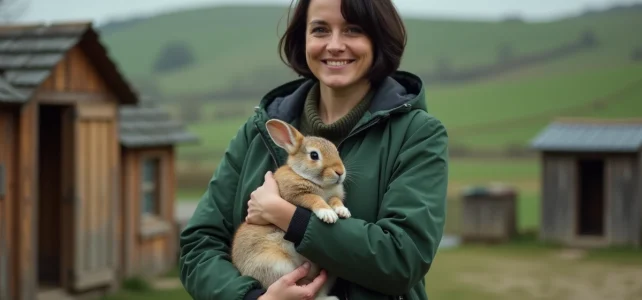
A breeder who agrees to sell his laying hens to a sanctuary rather than sending them to the slaughterhouse: this scene, still rare a few years ago, is multiplying in France and Europe. The animal liberation movement is no longer limited to clandestine actions filmed at night. It is becoming structured, diversified, and facing increasingly firm legal responses.
Negotiated releases: buying farm animals instead of stealing them
Since 2022, several French sanctuaries have been developing what is called transactional liberation. The principle is simple: instead of illegally entering a farm, an organization launches a fundraising campaign to buy animals destined for culling or slaughter.
You may also like : All the sports news: follow the latest updates, analyses, and sports results
Dairy cows at the end of their productive life, downgraded laying hens, or pigs not meeting production standards are the first to be targeted. Once purchased, they are transferred to shelters where they live without being exploited.
This model has a clear strategic advantage. It avoids prosecution for trespassing and allows organizations to communicate openly about their actions, with photos, videos, and veterinary follow-ups. To keep track of these initiatives and other forms of mobilization, Animal Liberation news regularly covers these buyout operations and ongoing grassroots campaigns.
You may also like : Aaron Nouchy: discover the journey and secrets of this fascinating personality
The limitation of this model lies in its cost. Buying an animal is not expensive in itself, but housing, feeding, and caring for it for years represents a significant budget. Sanctuaries operate almost exclusively on donations, making each rescue dependent on public generosity.

Judicialization of direct actions in Europe
While negotiated releases are developing, clandestine actions are facing a tougher judicial response. Between 2022 and 2024, several European countries, including Belgium and Germany, have strengthened or more strictly enforced laws on trespassing to target activists who enter farms or laboratories.
Prison sentences have been handed down. It is no longer just a fine or a warning. The report published in November 2023 by the European Center for Constitutional and Human Rights (ECCHR) documents this trend and points to a worrying phenomenon: the use of SLAPPs against animal rights activists.
In France, the Ministry of the Interior clarified in May 2023 that certain animal liberation actions are treated within the framework of the fight against “militant violence,” rather than as simple associative activism. This change in classification alters the investigative means employed and the penalties incurred.
What this concretely changes for organizations
Organizations that engage in direct actions must now incorporate a real criminal risk into their strategy. Several consequences arise from this:
- Internal legal teams become as strategic as field teams, with preparation before each action to anticipate prosecutions
- The most exposed activists turn to legal forms of action (demonstrations, digital campaigns, buyouts) rather than direct intrusion
- Communication around filmed investigations in farms is professionalized to stay within the framework of the right to information, which limits the risk of criminal reclassification
This judicialization does not hinder the movement. It pushes it to transform.
Investigations in farming and their impact on public opinion in France
Have you ever seen a video filmed in a slaughterhouse or intensive farm on your social media? These images are not shared by chance. They result from structured investigative work carried out by organizations like L214, which today constitutes one of the most effective levers of the French animal rights movement.
Each published investigation triggers a precise media cycle: video dissemination, press coverage, public authority reactions, then a return to silence until the next one. This format works because it makes visible what the majority of consumers never see.
The cumulative effect of these publications has contributed to concrete changes. Retail chains have modified their specifications regarding eggs from caged hens. Local authorities have integrated vegetarian meals into school catering. French public opinion has evolved towards a heightened sensitivity to animal welfare, even though consumption practices remain largely dominated by farm products.
Vegan diet and reduction of meat consumption
The link between animal liberation and diet is direct. An increasing portion of the French population is reducing their meat consumption, without necessarily becoming vegan. This underlying movement, driven by both ethical and environmental concerns, is slowly changing the market.
Animal rights organizations are investing in this area by providing practical resources: nutritional guides, recipes, support for families. The goal is no longer just to show animal suffering, but to offer accessible food alternatives.
Grassroots actions in Paris, Marseille, and major cities
The animal liberation movement remains rooted in local action. In Paris and Marseille, collectives regularly organize gatherings, documentary screenings, and leaflet distributions in front of slaughterhouses or fast-food outlets.
These local actions serve a dual purpose: to raise awareness among passersby and recruit new volunteers. They also maintain constant pressure, outside of the media peaks related to investigations.
Marches for the closure of slaughterhouses, organized annually in several cities across France, gather thousands of participants. They represent the most visible event of the French animal rights movement and function as a convergence point between organizations, sanctuaries, and engaged citizens.
The animal liberation movement is going through a maturation phase. Methods are diversifying, legal risks are increasing, and the boundary between legal action and civil disobedience is becoming a strategic choice for each organization. The coming years will tell if negotiated releases can scale up or if they will remain symbolic in the face of the scale of industrial farming.