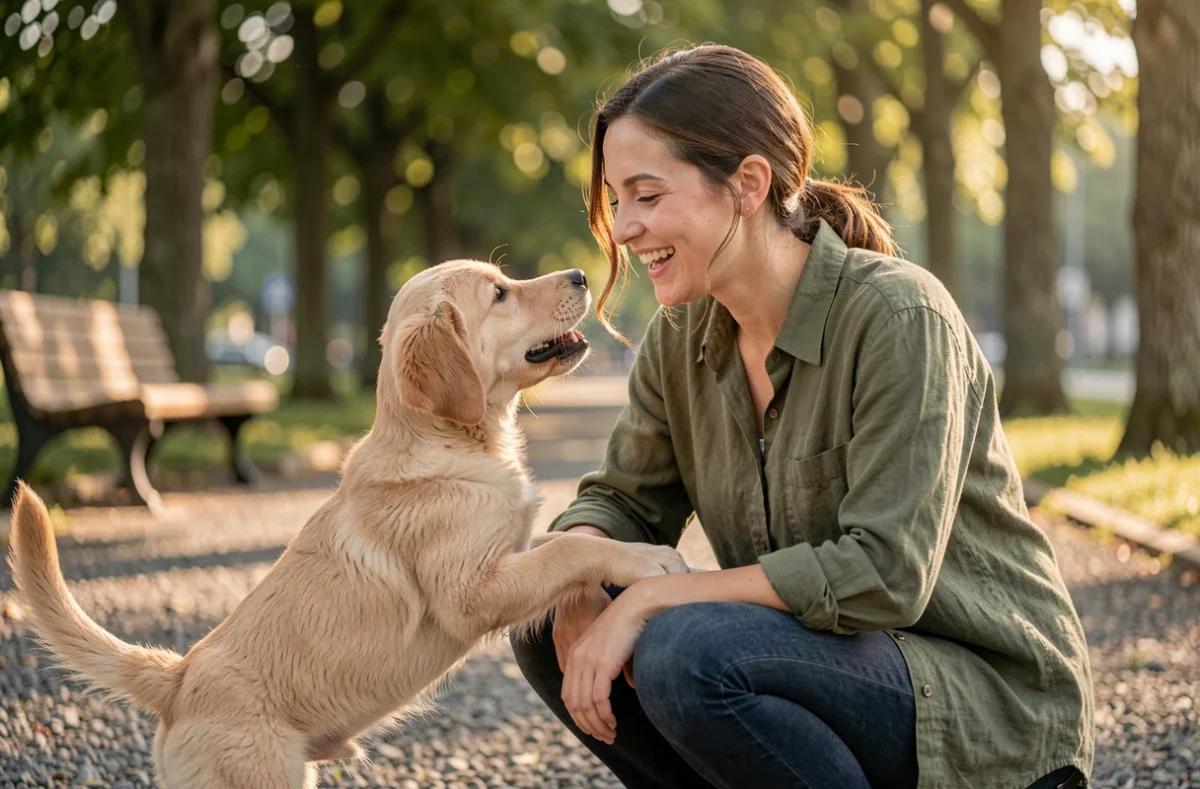
A dog shares its owner’s daily life for ten to fifteen years depending on the breed. Welcoming this animal means understanding the legal framework of the transfer, choosing a breed compatible with one’s lifestyle, and preparing a suitable environment from day one.
Commitment certificate and identification: the legal framework before the dog’s arrival
Before even preparing the home, an administrative step conditions any adoption. The commitment and knowledge certificate must be signed at least seven days before the transfer of the dog, whether it is done through a breeder, an individual, or an association. This mandatory reflection period has been designed to limit impulsive adoptions.
The identification of the dog (microchip or tattoo) is the responsibility of the transferor. It must be completed before handing over the animal. When picking up your companion, check that the identification number on the documents matches the one registered on the microchip. A discrepancy can cause problems in case of loss or dispute.
These obligations are not mere formalities. Shelters and associations had to refuse dogs due to lack of available space in 2025, which serves as a reminder that every poorly prepared adoption can have collective consequences. Finding information on La Maison des Animaux helps better understand the specific needs of each breed before committing.
Choosing a dog breed suitable for one’s lifestyle
The choice of breed is not just about aesthetic preference. Three concrete criteria determine the compatibility between a dog and its future home.

- The need for daily exercise varies significantly from one breed to another. A herding dog or a hunting dog requires several hours of physical activity per day, while a French bulldog is satisfied with shorter outings.
- Adult size determines the necessary space. A large dog can live in an apartment as long as it gets enough exercise, but a garden makes daily management easier for larger breeds.
- Predisposition to certain health issues varies by breed. Brachycephalic breeds (short-nosed) often face respiratory difficulties, while large breeds are more prone to joint disorders.
Adopting an adult dog from a shelter rather than a puppy is often an underestimated alternative. The animal’s character is already formed, which reduces behavioral surprises. Life changes and behavioral difficulties are among the most common reasons for abandonment, meaning that many dogs in shelters are simply victims of circumstances, not intrinsic problems.
Dog nutrition and veterinary care: the concrete basics
Nutrition represents the most regular recurring expense. A puppy does not eat like an adult, neither in quantity nor in composition. Puppy-formulated foods contain a protein-calcium ratio suitable for bone growth, while an adult dog needs a maintenance formula.
The dietary transition should be done gradually over a week to avoid digestive issues. Mix the old food with the new, increasing the proportion day by day.
Vaccinations and veterinary follow-up
The first visit to the veterinarian should take place within days of arrival. It allows for a general health check, updating the vaccination protocol, and planning sterilization if considered.
Vaccination booster protocols have evolved in recent years. Veterinarians no longer systematically administer the same boosters every year: the frequency depends on the type of vaccine and the dog’s level of exposure. The health booklet precisely mentions the date of the next necessary booster, line by line.

Puppy socialization: a time window not to be missed
Between eight and twelve weeks, the puppy goes through its socialization period. During this phase, every positive experience (urban noises, encounters with other animals, contact with various people) builds its ability to manage stress in adulthood.
The legal age for adoption is set at eight weeks. Waiting until ten to twelve weeks allows the puppy to finish learning canine social codes from its mother and siblings. A puppy separated too early is more likely to exhibit anxiety behaviors or excessive nipping.
Socialization does not stop upon arrival at your home. During the first weeks, increase short outings in varied environments. A well-socialized puppy before four months will be a more stable adult.
Training and cleanliness: patience and consistency
Cleanliness is acquired gradually. Take the puppy out after each meal, after each nap, and after each play session. Praise it as soon as it goes to the bathroom outside, without punishing it in case of an accident indoors. Punishment delays learning because the puppy associates the sanction with your presence, not with the act itself.
Positive training (rewarding the desired behavior rather than punishing the undesirable behavior) yields more lasting results. The first weeks require significant availability: planning at least two to three weeks of near-constant presence after the puppy’s arrival facilitates the transition.
Choosing to welcome a dog is a long-term commitment. The legal framework of the commitment certificate, the reasoned choice of breed, appropriate veterinary follow-up, and early socialization form a foundation that conditions the quality of life for both the animal and the household. Overcrowded shelters remind us that a dog well-prepared for family life has every chance of staying there.