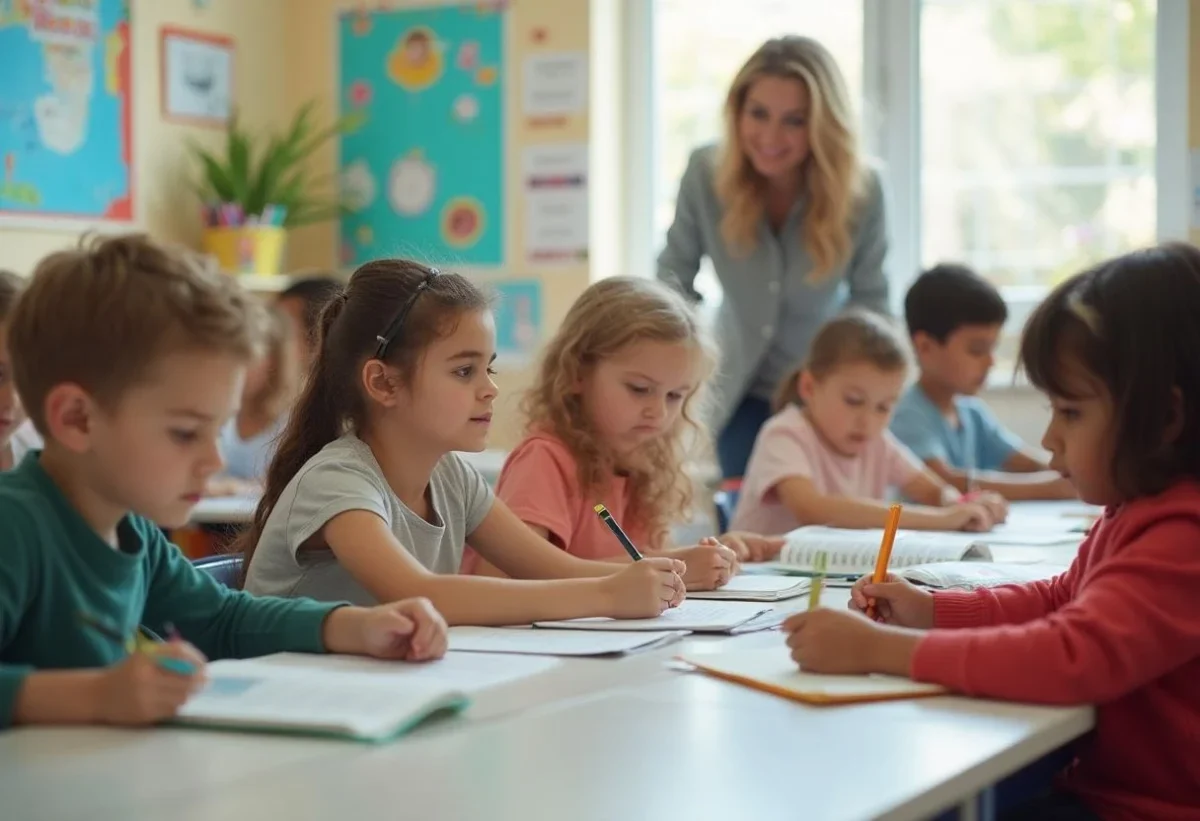
At the age where curiosity awakens and learning transforms into an exciting journey, CM1 students find themselves facing a multitude of new academic subjects and educational challenges. This school level marks a crucial stage in the cognitive development of students, as they begin to consolidate the foundations previously acquired while exploring more complex concepts. Understanding the specific needs of young learners at this stage is essential to provide them with the tools and strategies that will facilitate their academic success. By diving into the pedagogical methods and teaching approaches suited for CM1, teachers, parents, and educators can truly enrich the learning experience of these young minds. How can we help a CM1 child successfully navigate this constantly evolving learning environment?
Understanding Cognitive Development in CM1
At the CM1 age, children go through a phase of intellectual growth marked by an increased ability to think abstractly and solve problems independently.
Students begin to develop a more structured logical thinking, allowing them to tackle more complex mathematical and scientific concepts. This development is accompanied by an increase in concentration capacity, facilitating the learning of more demanding subjects.
- Concentration and Attention: Teachers can help students improve their attention through engaging activities that stimulate interest and curiosity.
- Problem Solving: Encouraging children to explore different approaches to solving a problem helps develop their critical thinking.
- Communication: Promoting class discussions enhances students’ ability to express their ideas clearly and interact constructively with their peers.
Adapted Pedagogical Strategies
Teaching methods must be adapted to meet the varied needs of CM1 students, taking into account their cognitive and emotional development.
Integrating a variety of pedagogical methods can energize learning. Interactive approaches, such as educational games and collaborative projects, actively engage students and reinforce their understanding of the concepts studied. The CM1 exercises are essential for helping students apply the concepts learned in class in a practical way.
Involving Parents in the Educational Process
Collaboration between school and home plays a fundamental role in the academic success of CM1 students.
Parents who actively participate in their child’s education create a favorable learning environment. Open communication between teachers and parents is essential to discuss the student’s progress and adapt learning strategies to individual needs.
- Encourage Reading at Home: Encouraging regular reading not only develops vocabulary and comprehension but also stimulates children’s imagination.
- Create a Dedicated Study Space: A calm and organized environment allows students to focus on their homework and work independently.
- Monitor Progress: Regularly discussing the child’s successes and areas for improvement boosts their self-confidence and encourages perseverance.
Supporting the Personal Growth of Students
Beyond academics, it is crucial to support the personal development of CM1 students so that they become well-rounded individuals.
Encouraging extracurricular activities allows children to explore their passions and develop valuable social skills. Sports, artistic, or musical activities are effective ways to teach discipline, teamwork, and creativity. By providing students with opportunities to express themselves and explore their interests, we contribute to their personal growth and the construction of their identity.
Building the confidence and autonomy of CM1 students is essential for their future success. By combining varied pedagogical strategies, active parental support, and opportunities for personal growth, we can create an environment conducive to learning and the overall development of the child.