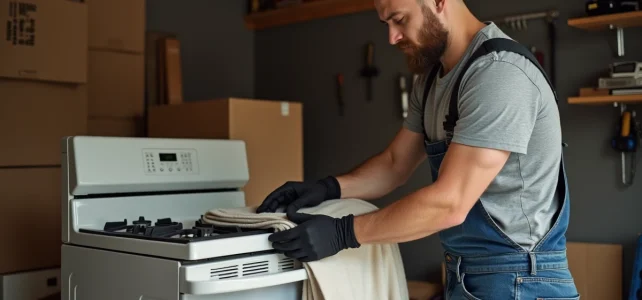
Transporting a stove during a move is not just about lifting it and placing it in a truck. The appliance combines significant weight, sensitive gas connections, and fragile surfaces. If not properly prepared, the transport can lead to leaks, deep scratches, or injuries. Here’s how to approach each step methodically.
Shutting off the gas before transport: the step that many overlook
Have you ever seen someone disconnect a stove by simply pulling on the hose? That’s the gesture that poses the most risks. Before any handling, the absolute priority is to close the gas shut-off valve on the wall, not just turn off the burners.
See also : Pivaut School: a springboard for budding artists
Recent manuals from manufacturers like Electrolux or Bosch emphasize this point: cutting off the electrical supply is not enough. The shut-off valve must be in the closed position, and the hose should be disconnected properly, without forcing the connection.
If your stove is connected by a fixed hose or a rigid connection (copper or steel pipe), several manufacturers now recommend calling a qualified technician for disconnection. This is not a commercial precaution: a poorly loosened connection can damage the threads and make reconnection dangerous. To better understand the procedure, it is helpful to transport stoves with 123 Net Immo, which details each phase of the process.
Recommended read : Optimizing Learning for CM1 Students: Effective Strategies and Tips
Stove in a vertical position: why it’s the only reliable option
The question often arises: can you lay a stove down to pass it through a narrow hallway or into a vehicle? The short answer: no, unless the manufacturer’s manual explicitly allows it, which is rare.
A stove laid down risks shifting internal components (burners, grate supports, or even the thermocouple). On a gas model, a component shifted by just a few millimeters can be enough to cause poor combustion or a leak after reinstallation.
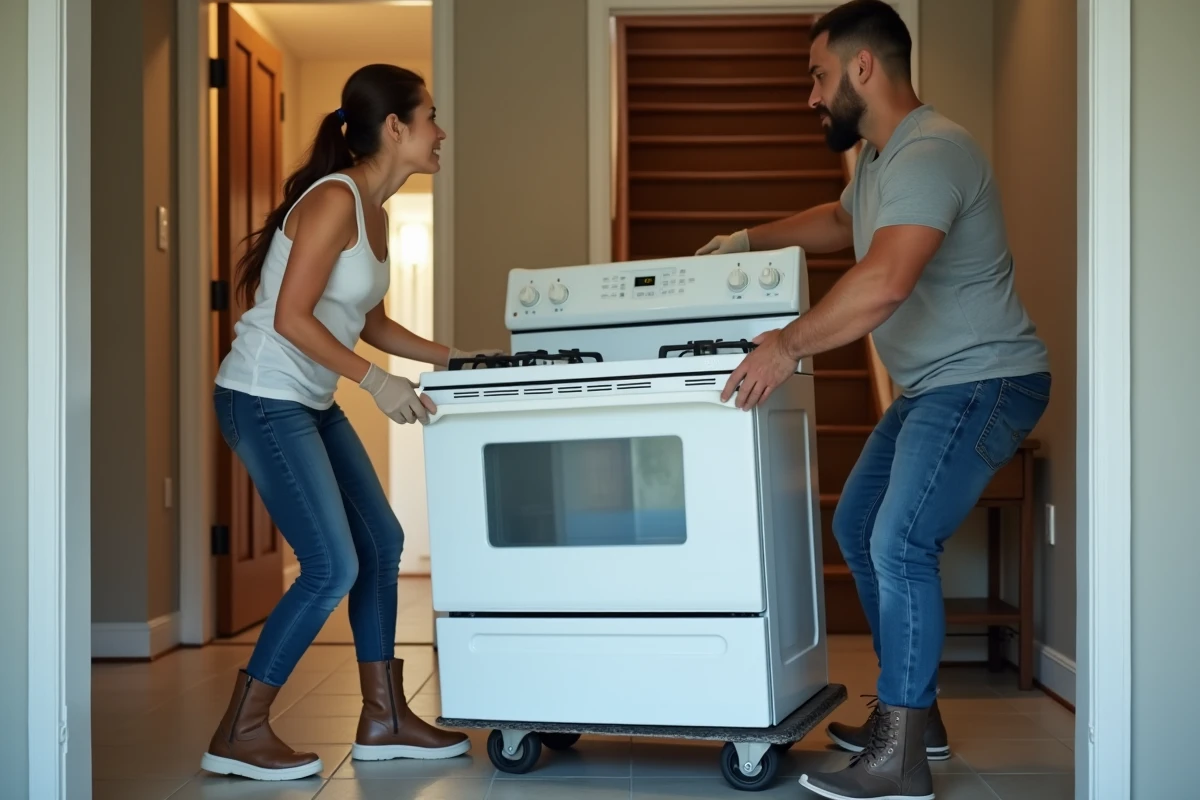
How to keep the appliance upright during transport
The most reliable method relies on three combined actions:
- Place the stove on a wide platform cart (not just a simple narrow dolly) and strap it securely to the vertical frame of the cart.
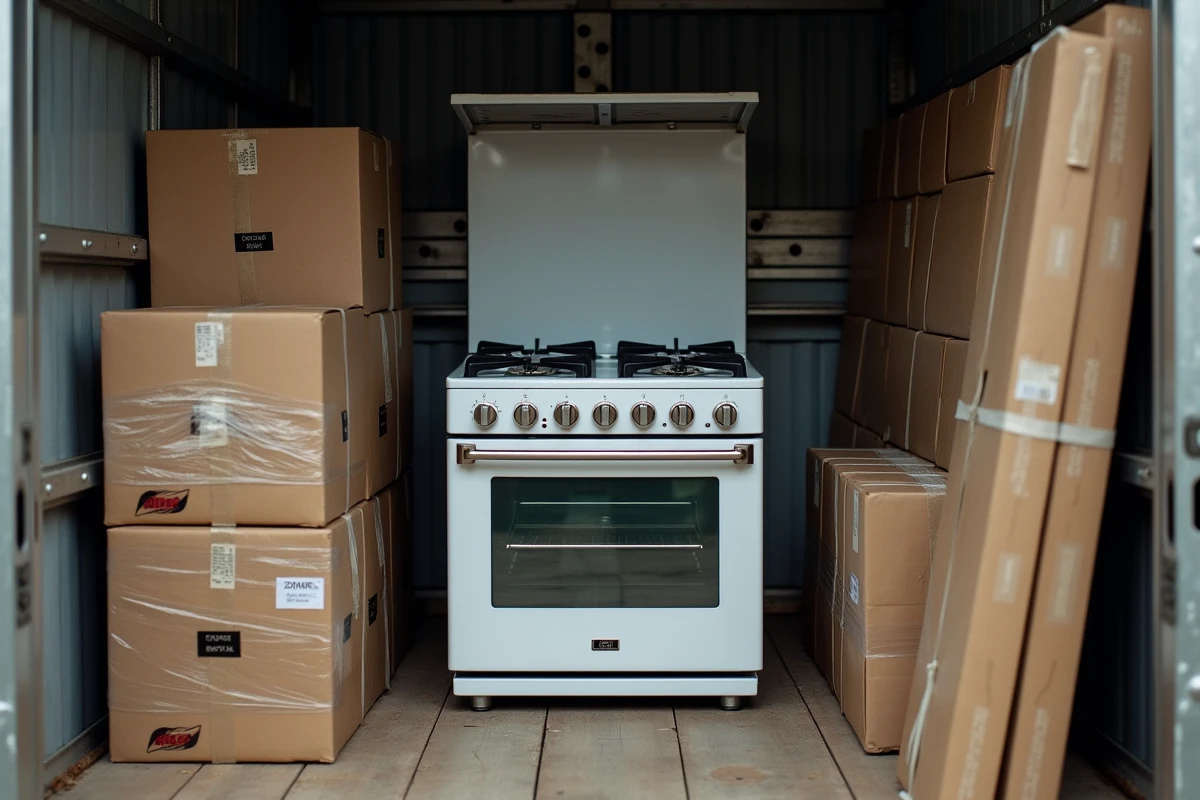
- In the truck, brace the appliance against a rigid wall and wedge the sides with thick moving blankets or filled boxes, to eliminate any swaying space.
- Attach a second strap between the stove and an anchor point in the vehicle, passing over the protected cooktop.
If you are using a van with a smooth floor, place a non-slip mat under the appliance. Sudden braking on smooth metal causes a heavy appliance to slide several dozen centimeters, with immediate consequences for the connections and the bodywork.
Protecting the surfaces and removable parts of the stove
The cast iron grates, burner caps, and oven door are the first items to remove before transport. Each of them can detach due to vibrations and scratch the enamel or glass of the door.
Remove and pack each removable part separately. The cast iron grates, in particular, are heavy and angular. Wrap them individually in bubble wrap or thick fabric, then store them in a sturdy box.
Oven door and cooktop
Secure the oven door with wide tape (like moving tape), making two complete wraps around the casing. Avoid thin packing tape, which easily gives way under impact.
The enamel or stainless steel cooktop is protected with a moving blanket held in place by stretch film. Stretch film alone does not protect against impacts; it is only used to keep the blanket in place.
Leak test after reconnection: the check that no one should skip
The transport is complete, and the stove is in place. The temptation is great to simply screw the hose back on and light a burner to check that everything works. The latest gas safety guides emphasize a point often overlooked: a leak test after every reconnection is essential.
The method accessible to everyone involves applying a foaming product (soapy water or a specific spray sold at hardware stores) on each connection after reopening the shut-off valve. If bubbles appear, the connection is leaking and must be tightened or replaced.
When to call in a professional
If you have the slightest doubt about the condition of the hose or connection, call a qualified technician. This is especially true in two cases:
- The hose has been bent, twisted, or crushed during transport (even slightly).
- The connection uses a rigid copper or steel pipe, which requires specialized tools and precise torque tightening.
- The stove is over ten years old and the hose has not been replaced recently, as the expiration date engraved on the hose may have passed.
A connection that seems leak-proof with soapy water may still have a micro-leak undetectable without measuring equipment. Having a professional check after a move remains the safest solution for old or complex installations.
Transporting a stove ultimately hinges on three specific moments: shutting off the gas before disconnection, maintaining vertical position during transport, and performing a leak test after reconnection. Each of these steps takes a few minutes, but this is where almost all the risks are concentrated.