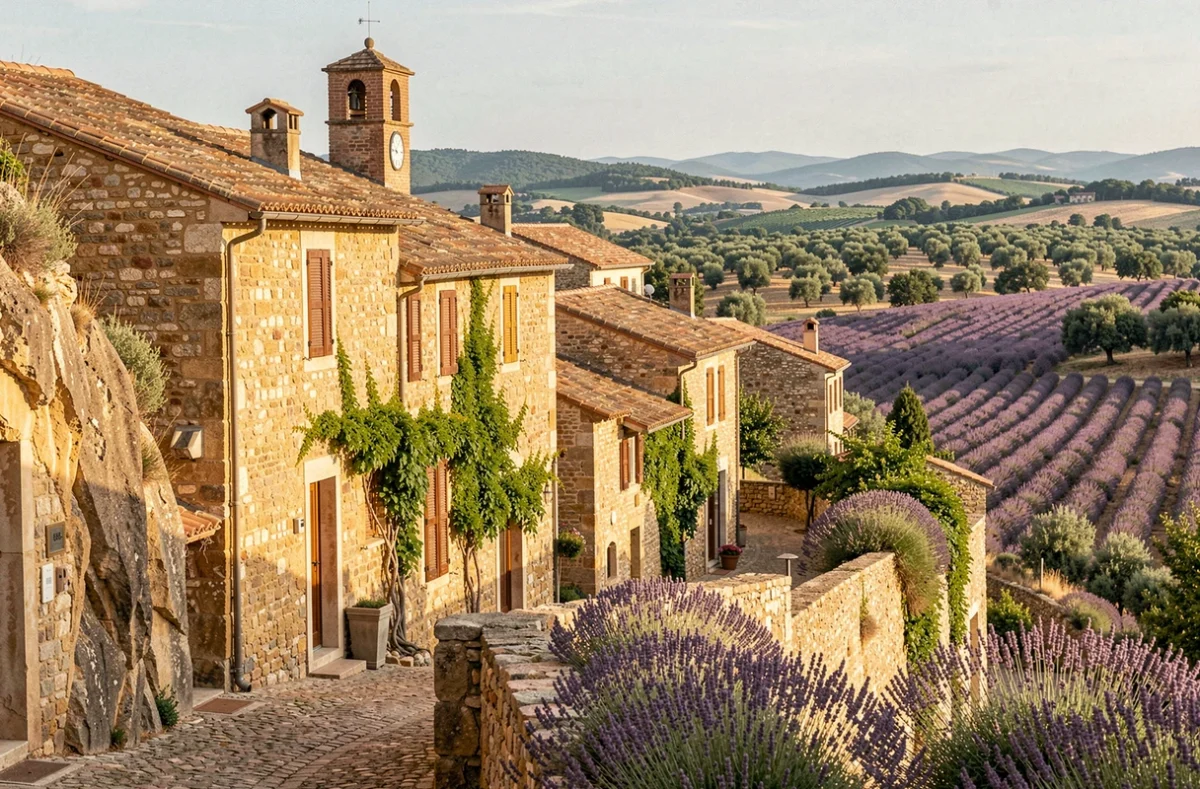
The Pays d’Apt is not just a Provençal postcard. This territory of the Luberon concentrates, within a tight perimeter, rare geological formations, ancient built heritage, and ecosystems sensitive to recent climate variations. Understanding what makes it unique also means measuring the tensions that run through it today.
Ocher and geology of the Luberon: a soil that tells millions of years of history
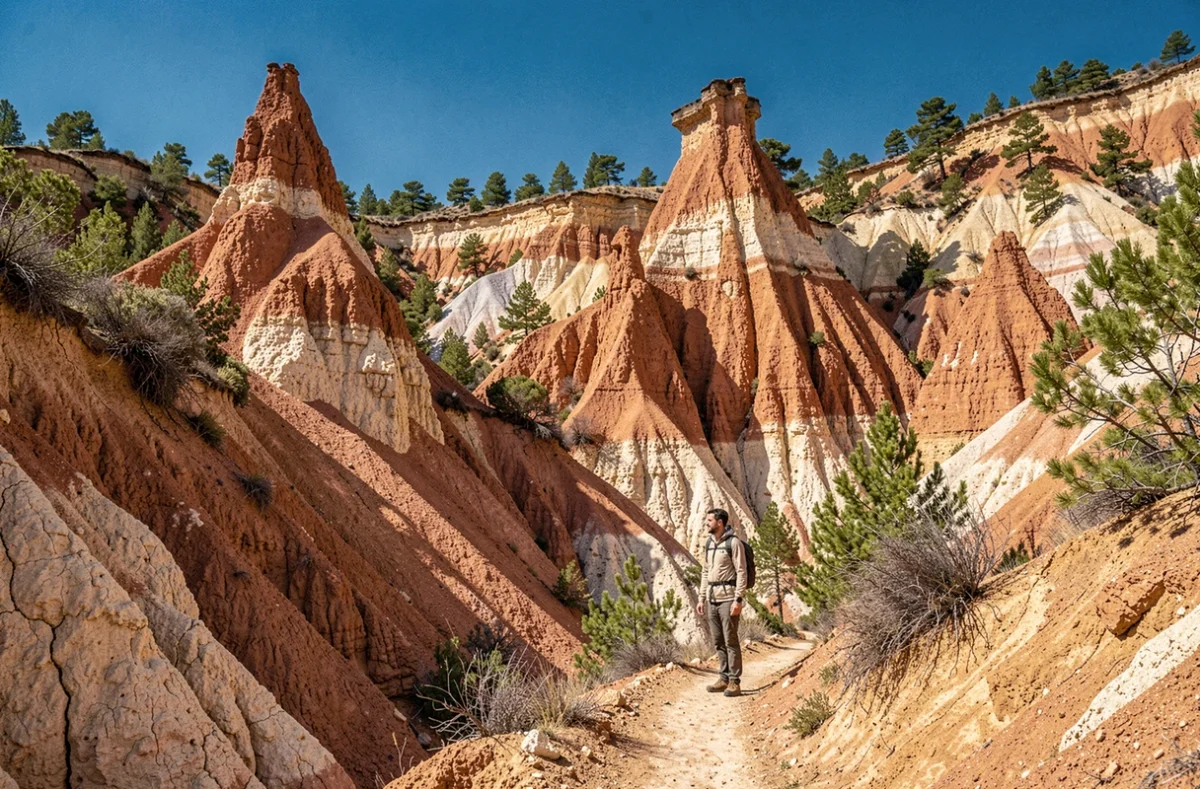
Have you ever noticed those cliffs with orange, red, or yellow hues in reports about Provence? These are not surface pigments. The ochres of the Luberon result from a geological process that spans several tens of millions of years: the alteration of green sandstones rich in glauconite has released iron oxides, creating these colored layers visible to the naked eye.
This phenomenon is not common in Western Europe. Only a few sites present comparable outcrops. The Pays APT concentrates several within a restricted radius, which explains the historical establishment of a local ochre industry. Extraction has shaped the landscape as much as natural erosion.
Gargas, Rustrel, and Roussillon are the municipalities most marked by this geology. The former quarries, like the Bruoux mines, allow for observation of the rock in cross-section. Ocher remains a natural pigment exploited locally, although industrial production has significantly decreased since the mid-20th century.
Built heritage in Pays d’Apt: beyond the perched villages
The perched villages of the Luberon attract visitors for their narrow streets and viewpoints. What is less noticed is the historical depth of certain buildings.
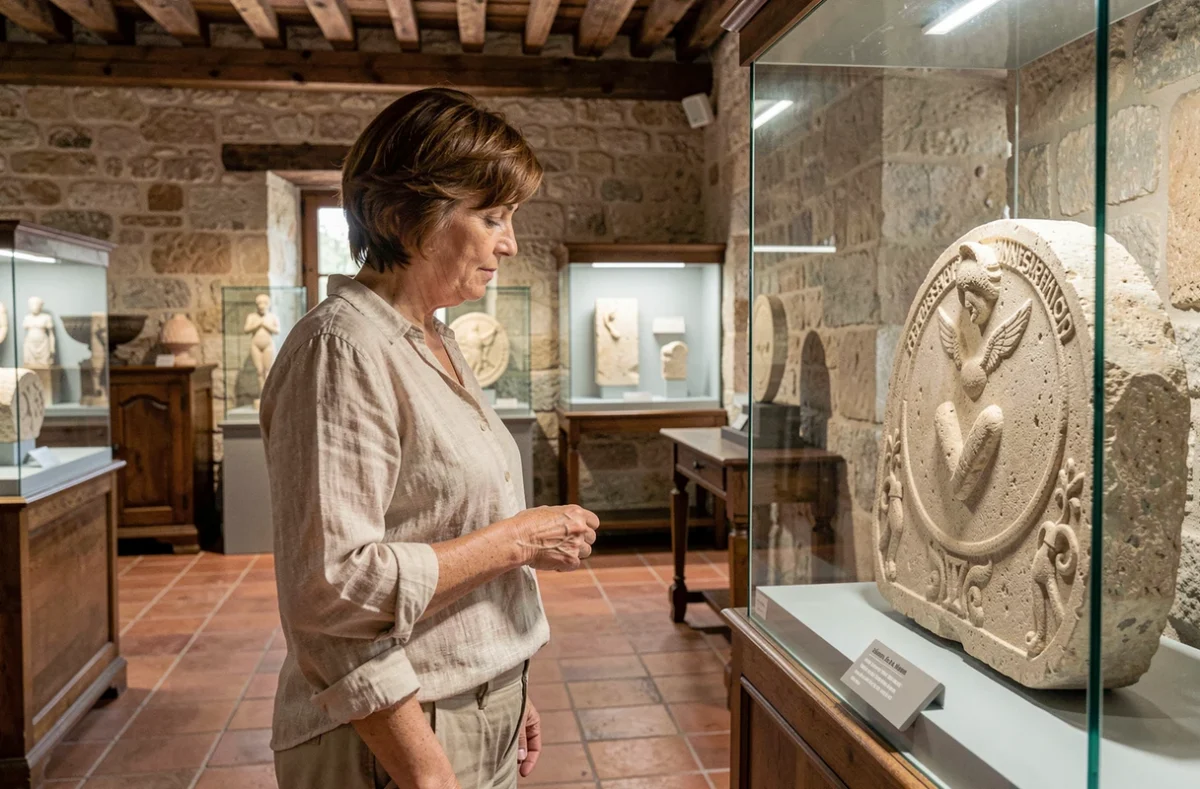
Apt itself bears traces of its Roman past under the name Apta Julia. The Pont Julien, a Roman structure still standing over the Calavon, testifies to the importance of this transportation route in antiquity.
Beyond these well-known sites, prehistory in Pays d’Apt has been the subject of research for over a century. Successive excavations have documented ancient human occupations in several caves and rock shelters in the area. This archaeological aspect remains little highlighted by traditional tourist guides.
Bories, dry stone walls, and small rural heritage
The territory also has a discreet vernacular heritage: bories (dry stone huts), restanques (terraced fields), fountains, and washhouses. These constructions tell the story of a rural economy where every stone had a use. Their maintenance often depends on local associations and programs supported by the Luberon Regional Natural Park.
Nature and hiking in the Luberon: a territory under climate pressure
The Luberon Regional Natural Park encompasses a large part of the Pays d’Apt. The landscapes vary according to altitude and exposure: cedar forests on the Petit Luberon, dry garrigues on the plateaus, riparian forests along the Calavon-Coulon.
The botanical diversity of the area is explained by the meeting of Mediterranean and mountainous influences. The flora changes significantly between the valley floor and the ridges, over just a few hundred meters of elevation.
Before heading out for a hike, one point deserves attention: access to forested areas depends on the level of fire risk. The tourism office regularly publishes updates on trail accessibility. During the summer, some routes may be closed by prefectural decree, including usually open marked trails.
- The ochre trail on foot, over several days, connects Roussillon, Rustrel, and Apt via ridge paths and valley bottoms.
- The cedar forest on the Petit Luberon offers a pleasant shaded cover in summer, but access may be restricted during heatwave alerts.
- The Riaille water body, near Apt, provides a cool spot for families, provided that opening conditions are checked.
Tourist attendance and climate: what the 2026 season reveals
The Pays d’Apt is not immune to the effects of warming on Provençal tourism. In the mid-season report published on September 3, 2026, the Pays d’Apt Luberon tourism office reported a decline in attendance, particularly among French visitors. Professionals associate this decline with repeated heatwave episodes.
The figures are clear: tourist sites recorded a decrease estimated between 7 and 10%. Some restaurants experienced a decline of up to 30%. The heat has also led to technical cost increases for establishments, particularly in air conditioning and water management.
Water, a central issue for the Calavon-Coulon basin
The question of water resources goes beyond the tourism sector alone. Elected officials from the community of communes have noted that the objectives for good resource status were not achieved at the end of the previous management program. A new consultation at the scale of the Calavon-Coulon basin is planned.
This issue directly conditions the agricultural future of the territory. Lavender, cherry trees, and vineyards, emblematic crops of the Pays d’Apt, depend on an increasingly fragile water balance. The slow tourism promoted by the territory will have to contend with these environmental constraints.
Art, museums, and cultural life around Apt
The Ochre Ecomuseum (Okhra), housed in a former factory in Roussillon, offers workshops for pigment production. This place does not simply exhibit: it transmits know-how related to the territory.
- The European Heritage Days open annually sites usually closed to the public in the villages of the Pays d’Apt.
- Creative workshops for families are offered during school holidays in several municipalities.
The Pays d’Apt derives its richness from a rare combination: unique geology, historical depth, and biodiversity concentrated over a small area. Recent climate and water tensions remind us that this heritage is not fixed. Visiting this territory with curiosity also means accepting that it changes.