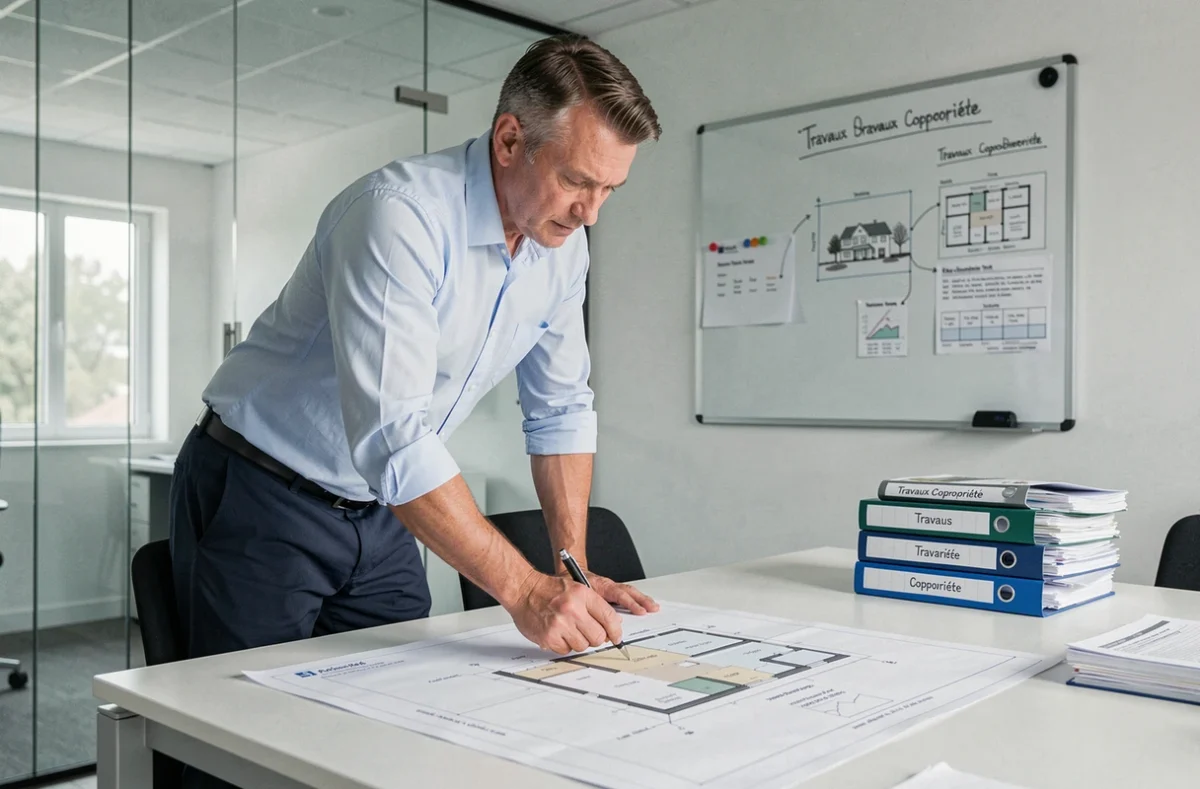
A renovation voted in the general assembly eighteen months ago, and still no scaffolding in sight. The property manager cites delays in estimates, the council demands a schedule, and the co-owners are growing impatient. This situation, common in the management of works in co-ownership, reveals a concrete problem: between the vote and the acceptance of the work, no one knows who is following what, or how.
Work Fund and PPT: the budgetary framework that conditions the follow-up
Before talking about the work, we talk about money. The multi-year work plan (PPT) now applies to residential co-ownerships of 50 lots or fewer as soon as the building exceeds 15 years, unless a global technical diagnosis reveals no need for work in the next ten years. The schedule was gradually extended to larger co-ownerships in 2023 and 2024.
A point often misunderstood: the PPT project is not a mandatory work program. It only becomes one after total or partial adoption by the general assembly. The study document identifies and prioritizes needs, while the adopted plan serves as an operational reference for the schedule, calls for funds, and financing.
The adoption of the PPT also modifies the minimum contribution level to the work fund. The contribution must then simultaneously respect two floors: 5% of the projected budget and 2.5% of the amount of work planned in the plan, with the highest amount being retained. You can consult the work on Alias Immo to visualize how these obligations are concretely reflected in the follow-up of a building.
This fund must be placed in a separate, interest-bearing account in the name of the co-owners’ union. The property manager cannot merge this account with the current treasury. If your charge statement does not clearly distinguish the work fund from the projected budget, it is a warning signal.

Site follow-up in co-ownership: who does what between the property manager and the council
The property manager signs the contract with the selected company, pays the deposit according to the terms of the estimate, and ensures follow-up until acceptance. On paper, it is clear. In practice, feedback varies greatly depending on the size of the firm and the complexity of the project.
Small works: the property manager can manage alone
Painting of common areas, replacement of an intercom, repair of the parking door: for these common interventions, the property manager generally has sufficient technical skills. They compare estimates, place orders, and check compliance upon delivery.
Major works: external project management becomes necessary
Facade renovation, roof repair, overall energy renovation: on these projects, the property manager is not intended to ensure technical follow-up. An external project manager (architect, engineering firm) is then mandated, whose mission covers drafting the specifications, analyzing offers, monitoring compliance during the project, and assisting with acceptance.
The council plays a relay role. It does not have decision-making power over the project, but it can demand regular reports, attend site meetings, and report discrepancies to the property manager. When this relay works, delays or budget overruns are detected early.
- The property manager handles the administrative and financial aspects: contract, calls for funds, payment of work situations, subscribing to damage insurance if necessary.
- The project manager handles the technical aspects: compliance with the specifications, coordination of companies, verification of execution quality.
- The council ensures the liaison between co-owners and professionals: transmission of information, reporting of dysfunctions, presence at site visits.
Acceptance of works in co-ownership: the reservations to be made
Acceptance is the act by which the co-owners’ union accepts the work, with or without reservations. It is a decisive moment because it triggers legal guarantees (perfect completion, two-year, ten-year).
Signing an acceptance report without reservation closes the door to the guarantee of perfect completion for visible defects on the day of the visit. It cannot be stressed enough: a co-owner or a member of the council present during the acceptance must note every anomaly, even minor, such as paint cracks, missing seals, or poorly finished joints.
The property manager attends the acceptance and makes reservations if necessary. If a project manager has been appointed, they draft the report and list the points to be addressed. The company then has a deadline to address these reservations, failing which the balance of the invoice remains blocked.
Voting on works in the general assembly: the majority rules to know
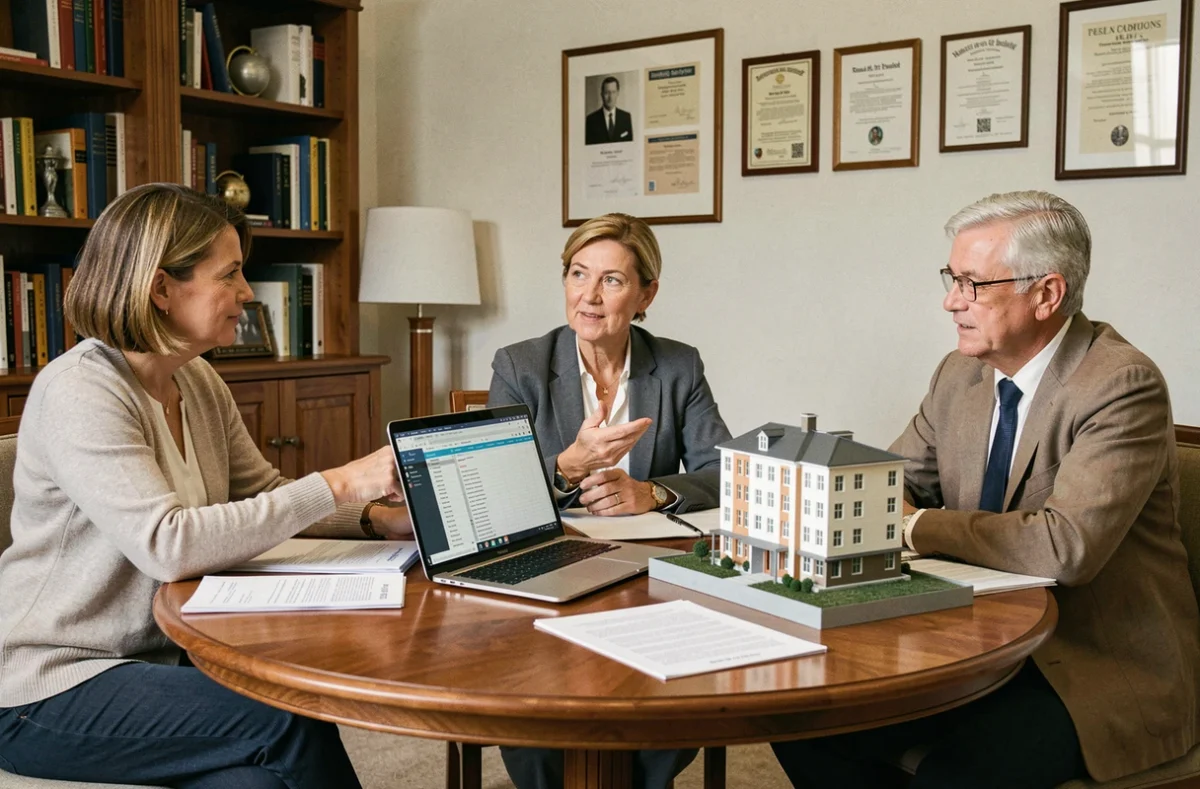
Not all works are voted on in the same way. The majority rule depends on the nature of the intervention.
- Simple majority (article 24): routine maintenance and upkeep work, accessibility for disabled persons, work made mandatory by law.
- Absolute majority (article 25): improvement work (elevator, digicode, insulation), appointment of a project manager, authorization of private works affecting common areas.
- Double majority (article 26): work resulting in a transformation or addition of common areas, modification of the co-ownership regulations related to the enjoyment of common areas.
A point to watch: when the absolute majority is not reached but the project receives at least one-third of the votes, a second vote by simple majority can be organized during the same assembly. This bridging mechanism, provided by law, allows projects that narrowly fail to be unlocked.
The effective follow-up of works in co-ownership is not limited to the project itself. It begins with the establishment of a properly funded fund, goes through a clear division of responsibilities between the property manager, project manager, and council, and continues well after the completion of the works with the management of reservations and guarantees. A well-drafted acceptance report protects the co-ownership for ten years.