
Bamboo torture is among the most frequently mentioned tortures in popular culture. However, no reliable primary source has documented its use as a codified practice. The gap between the power of the image and the fragility of historical evidence is the real subject of analysis surrounding this legendary torture.
Bamboo Torture: Historical Evidence vs. Visual Dissemination
An examination of the available sources shows a clear imbalance between the quantity of visual representations (engravings, colonial photographs, travel narratives) and the number of verifiable direct testimonies. The table below summarizes this opposition.
| Type of Source | Bamboo Torture | Lingchi (death by a thousand cuts) |
|---|---|---|
| Primary Sources (minutes, decrees, penal codes) | None identified to date | Mentioned in imperial Chinese penal codes |
| First-Hand Testimonies | A Sri Lankan civilian mentioned by Wikipedia, without corroboration | Photographs taken on-site, consular testimonies |
| Engravings and Images in Circulation | Numerous, especially from the 19th century | Very numerous, including in FranceArchives collections |
| Museum or Archival Presence | Absent from specialized collections | Present in several documentary collections |
The contrast is striking. For lingchi, there are administrative and judicial traces, dated photographic evidence, and descriptions in penal codes. For Chinese bamboo torture, no first-hand documentary evidence has been found.
Confusion Between Asian Tortures: Bamboo, Lingchi, and Impalement
Part of the persistence of the myth lies in the frequent confusion between several practices. Bamboo torture is often conflated with lingchi or impalement, two historically distinct forms of torture.
- Lingchi (or “death by a thousand cuts”) is a Chinese torture abolished in the early 20th century, documented by photographs and imperial legal texts.
- Impalement, practiced in several regions of the world, involves piercing the body with a stake. 16th-century engravings depict this practice without any direct link to bamboo.
- Bamboo torture relies on a different biological principle: the rapid growth of the shoot, with some species potentially growing 4 cm per hour, could theoretically pierce a body immobilized above.
This confusion feeds a cycle: images of a real torture (lingchi, for example) sometimes circulate accompanied by legends mentioning bamboo, thus reinforcing the credibility of a practice whose existence remains unproven.
The Viral Legend of Bamboo: How an Image Replaces Evidence
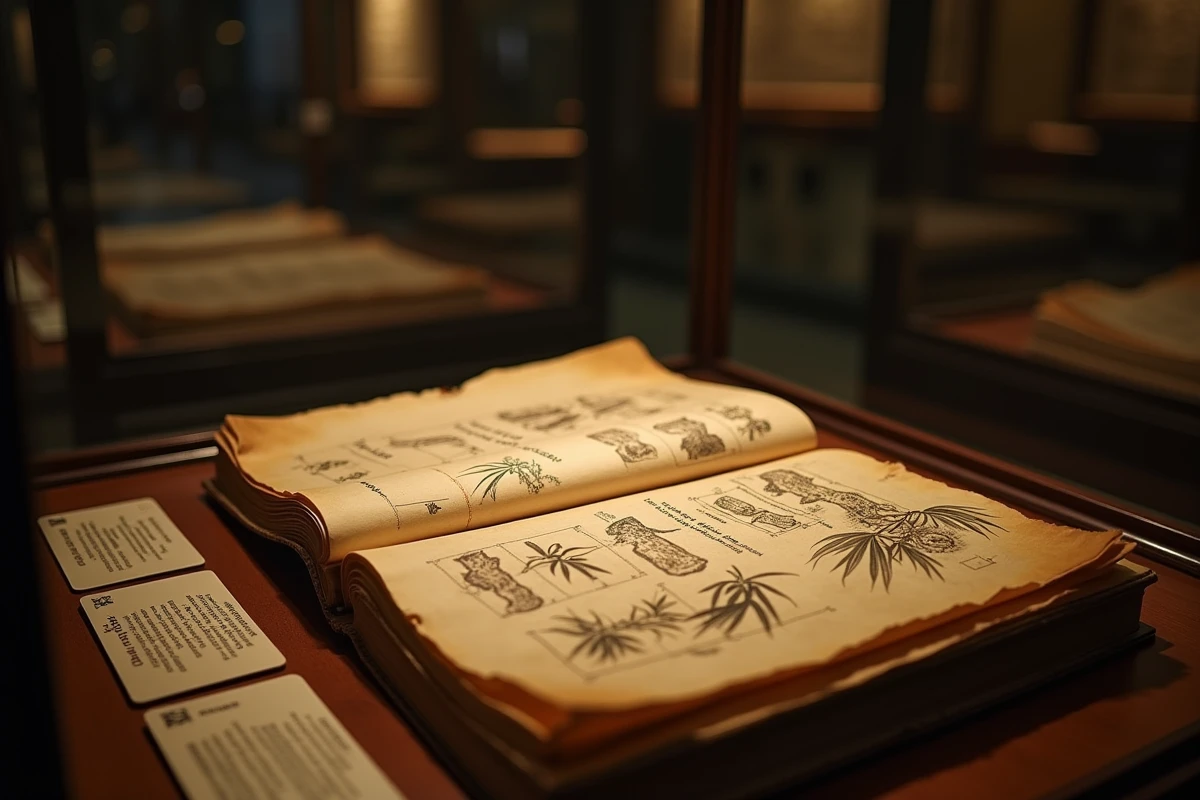
Archives and documentary collections, particularly those of FranceArchives, hold photographs and engravings dated between 1875 and 1921 depicting scenes of torture in China. These images circulated in the West in a colonial context where the exoticism and supposed cruelty of Asia fueled a powerful imagination.
The visual reception of the theme is stronger than its factual grounding. The engravings do not necessarily depict bamboo torture, but they are regularly associated with this narrative when redistributed online.
Mechanism of Virality
Bamboo torture possesses several characteristics that favor dissemination on social networks and in digital media:
- A simple mechanism to visualize (a plant growing through a body), easy to summarize in a few sentences or in an infographic.
- A distant geographical anchoring, making verification difficult for a Western reader.
- A biological dimension (the speed of bamboo growth) that gives a scientific appearance to the narrative.
- The absence of precise historical context, allowing it to be freely attributed to different times and regions.
This cocktail produces a narrative that transmits more easily than it verifies. Bamboo torture works better as a viral image than as a historical fact.

Differentiating Documented Torture from Legend: Concrete Indicators
To assess the credibility of a historical torture narrative, several criteria can help distinguish verified facts from legends.
The first indicator concerns the existence of administrative or judicial sources. A torture actually practiced on a large scale leaves traces in penal codes, trial archives, and diplomatic reports. Lingchi has these. Bamboo torture does not.
The second indicator pertains to the nature of testimonies. A narrative reported by a passing traveler is not equivalent to a minute written by a local official. Mentions of bamboo as a torture instrument come almost exclusively from secondary sources or colonial narratives.
The third indicator is the coherence among descriptions. Accounts of bamboo torture vary significantly: country of origin (China, Japan, India, Sri Lanka), supposed time period, exact method. This geographical and temporal dispersion signals a migratory narrative, not a codified practice.
The MythBusters Test and Its Limits
The show MythBusters tested the ability of a bamboo shoot to penetrate a material simulating human tissue, with a positive result. This experiment proves that bamboo growth could theoretically pierce tissues. However, it does not prove that this method was used as organized torture. The biological feasibility of a torture does not demonstrate its historical reality.
Chinese bamboo torture remains, in light of the available sources, a legend whose strength lies in its narrative simplicity and the power of its visual representations. Documented tortures in Asia, such as lingchi, offer a useful contrast: where evidence exists, it is multiple and consistent. The complete absence of primary evidence for bamboo is, in itself, a significant data point.