
The chapka, this emblematic headgear often associated with the harshness of the Russian winter, is much more than just a fashion accessory. It tells a rich story, crossing borders and eras, while evoking the vast snowy plains of Siberia and the bustling cities of the East. Worn by tsars and ordinary citizens alike, its distinctive look, with its foldable flaps, remains inseparable from the idea of biting cold.
Origins and History of the Chapka
The journey of the chapka began several centuries ago. Its history is closely linked to that of the Northern peoples.
Further reading : Psychometric Tests: The Key to Professional and Personal Success
The first traces of the chapka date back to medieval times in Russia. Designed to combat freezing temperatures, it was initially made from local furs. Around the 16th century, it became a symbol of social status, worn by nobles and wealthy merchants.
- Military Use: With the expansion of the Russian Empire, the chapka found its place in military uniforms, providing warmth and protection.
- Popularity in Europe: In the 19th century, it crossed borders to enchant Europe, thanks to cultural exchanges and the travels of the elites.
Its adoption in Europe marked the beginning of its integration into different cultures, beyond its Russian roots.
See also : The Chinese Bamboo Torture: History, Origins, and Realities of a Legendary Torture
Distinctive Characteristics of the Chapka
The chapka is distinguished by unique stylistic and functional elements that make it indispensable in the freezing cold.
The design of the chapka is characterized by its enveloping shape, its ear flaps often lined with fur, and its adjustable strap under the chin for optimal comfort. The choice of materials such as leather, wool, and, of course, fur highlights its thermal efficiency. Modern variants incorporate synthetic textiles, blending tradition and innovation.
- The ear flaps: a true signature of the chapka, providing enhanced protection against the wind.
- The inner lining: often made of fur or insulating materials to retain body heat.
- The style: from the traditional fur chapka to more contemporary and streamlined versions, it adapts to all tastes.
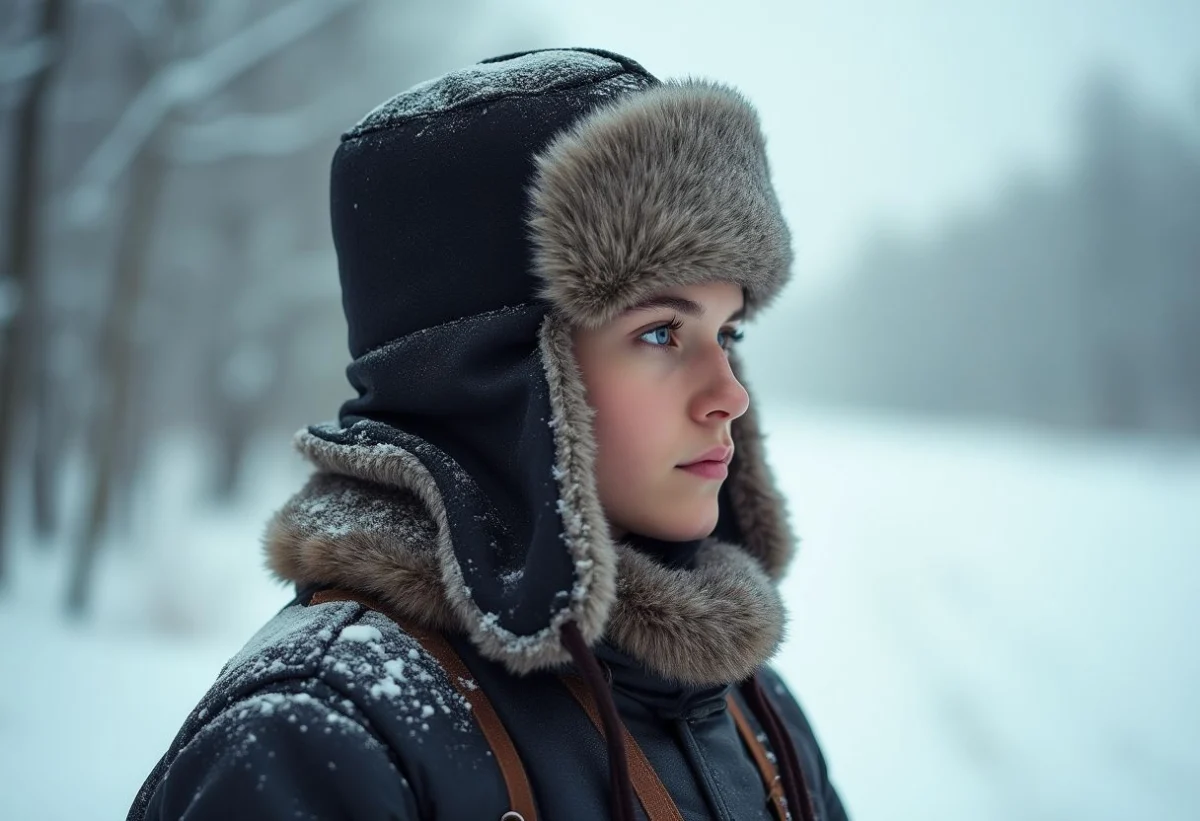
The Chapka in Contemporary Fashion
Having become a sought-after fashion accessory, the chapka transcends seasons and trends, making its mark in winter collections.
Fashion designers have embraced the chapka, reinterpreting it each season. From Karl Lagerfeld to Jean-Paul Gaultier, it walks the runways, symbolizing a marriage between tradition and modernity. Luxurious materials and refined finishes have made it a must-have fashion item.
In the streets, the chapka is a popular choice for those looking to stand out while staying warm. It pairs well with both an elegant coat and a casual jacket, illustrating its versatility.
Symbolism and Cultural Impact
More than just an accessory, the chapka is a powerful cultural symbol, reflecting the history and traditions of the Northern peoples.
The chapka is not only seen as a fashion item. It is also a significant cultural symbol, particularly in Russia and Eastern countries. It evokes ancient heritage and traditions while being a silent witness to social and political changes.
In the West, it is often associated with stereotypes, but also with curiosity and an attraction to exoticism. This reflects how cultural objects can transcend their original context to acquire new meanings on a global scale.
The chapka remains a timeless accessory, combining warmth, style, and history. Its journey through the ages continues to captivate and seduce, embodying a tangible link between past and present. Through its multiple incarnations, it remains rooted in our collective imaginations as the guardian of the secrets of the harshest winters.